Loafy logo Loafy

Your Sourdough Companion.

Loafy is your sourdough companion from The Bread Code. It diagnoses dough and starter issues, explains the why, and guides you through step by step bakes tailored to your kitchen and schedule.

Diagnose Instantly

Describe your dough, flour, and timing. Loafy isolates the most likely variable and prescribes a precise fix, no scrolling through forums while your dough overferments.

Proven Framework

Every answer is grounded in The Sourdough Framework from The Bread Code, a logical system for predictable, bakery quality bread using single variable thinking.

Interactive Guidance

Follow a step by step sourdough bread flow with smart timers, pause points, and ingredient scaling for any loaf size.

Build Repeatable Skill

Loafy explains the principles so every bake becomes a small experiment you can repeat and improve.

How it works

1

Pick your mode.

Start a fresh bake with guided steps, or troubleshoot a dough that's acting up.

2

Get real-time help.

Use smart timers and calculators, or chat with Loafy to diagnose issues instantly.

3

Master the result.

Turn every bake into a learning experience and achieve bakery-quality bread.

What Loafy can help with

  • Starter care and feeding schedules.
  • Hydration and dough strength.
  • Bulk fermentation and proof timing.
  • Shaping and surface tension.
  • Oven spring and scoring.
  • Crumb problems, gummy or dense.
  • Flavor balance, acidity and sweetness.
  • Equipment alternatives, your kitchen is enough.

Example prompts

  • My starter doubled then collapsed, is it ready to use?
  • My dough tears during shaping, what should I change?
  • I want a more open crumb at 75 percent hydration, how can I adjust?
  • My loaf is pale, how do I get better color without burning it?
  • How can I adapt this recipe for whole grain flour?

Share your results, ask the community.

Join fellow bakers to share tips, celebrate successes, and get feedback.

Ready to bake better bread?

Frequently asked sourdough questions

My starter does not double in size

It can still be healthy. Different flours rise differently. Use it before it collapses.

Read more

What’s the best starter feeding ratio?

Commonly 1:5:5 or 1:10:10. Stiff starter ~1:5:2.5. Adjust for freshness.

Read more

My new starter doesn’t rise at all

Use unchlorinated water. Whole‑grain flour helps. Keep it warm and wait.

Read more

Day 3 rise, then nothing

Normal starter phase. Keep feeding. Balance returns with time.

Read more

Liquid on my starter

Hooch is normal. Stir it in or pour off a bit, then feed.

Read more

Starter is too sour

Feed more frequently. Use higher ratios. Keep it cooler.

Read more

Starter smells like vinegar/acetone

Signs of imbalance. Refresh with larger feeds; reduce acidity.

Read more

Float test fails

Not always reliable. Go by rise, smell, and timing instead.

Read more

Aliquot sample doesn’t rise

Check starter activity and dough temperature. Give it time.

Read more

What hydration should I use?

Start moderate. Match hydration to flour strength and skill.

Read more

Dough tears after long fermentation

Likely overfermented or weak gluten. Shorten time, add strength.

Read more

My bread stays flat

Check fermentation, shaping, scoring, and steam. Improve strength.

Read more

Crumb points to fermentation issues

Use crumb clues to diagnose over/underfermentation and strength.

Read more

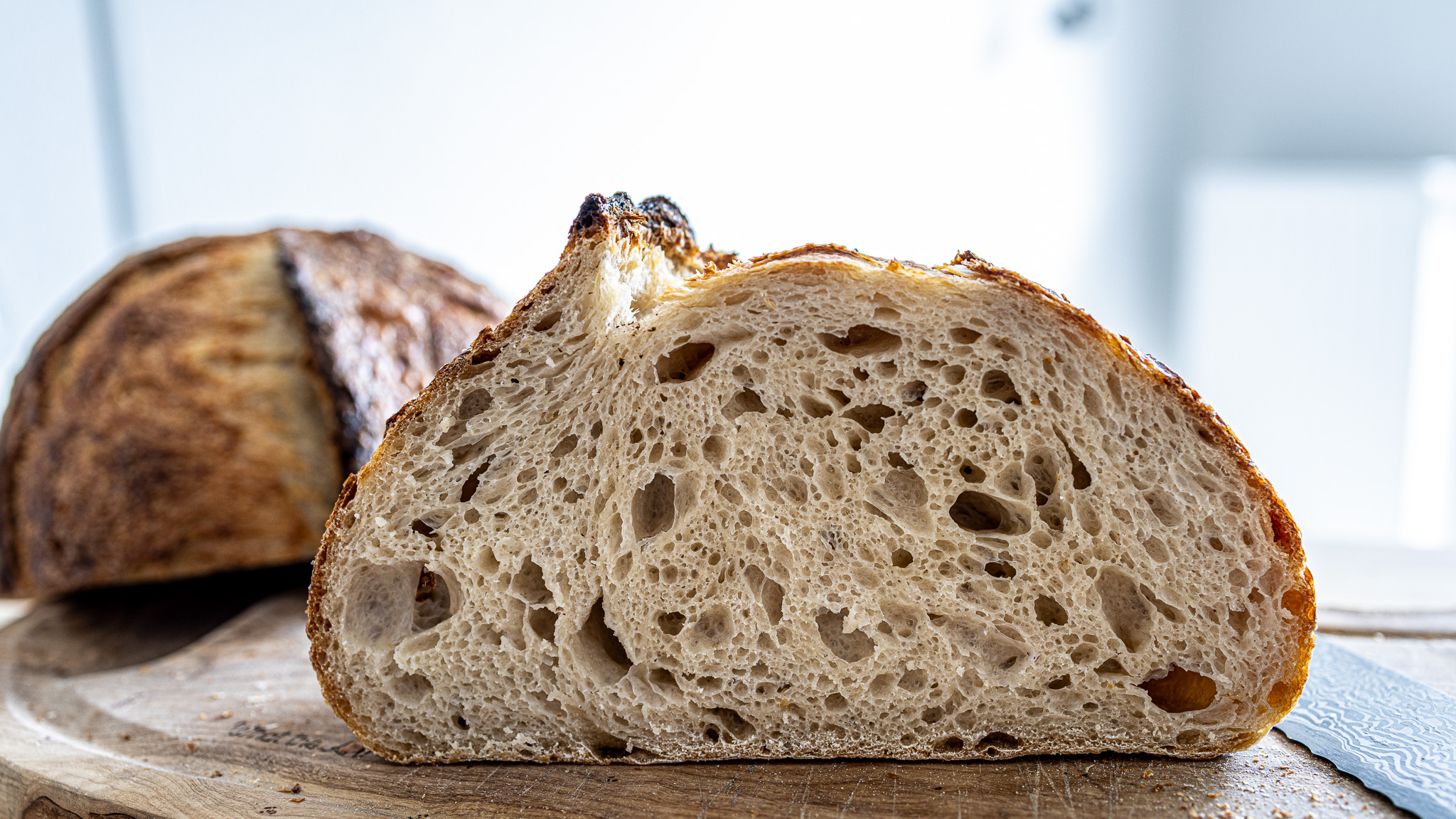
How do I get a more open crumb?

Build dough strength, balance fermentation, and match hydration to your flour.

Read more

Read more in The Sourdough Framework troubleshooting guide: Troubleshooting