Ready to Bake?
This journey guides you through the baking process with timers for each phase.
You’ll need:
- Shaped, proofed dough (from fridge or room temp)
- Preheated oven at 230°C (450°F)
- Steam method ready (Dutch oven, water tray, or steam setting)
- Lame or sharp knife for scoring
The two phases of baking:
- Steam phase (~30 min) for maximum oven spring
- Crust phase (~15-25 min) for beautiful browning
Based on The Sourdough Framework: Baking Chapter.

Frequently asked questions
Does putting water in the oven lower the baking temperature?
A little, which is why I pour in boiling water rather than cold: it turns into steam quickly. That steam in the first half of the bake is what lets the loaf spring before the crust sets.
How should I store baked sourdough bread?
A sealed plastic bag in the fridge keeps it good for weeks, and toasting each slice brings the crispness back. For longer storage, slice it and freeze portions you can eat within a day.
Why does my bread crack somewhere other than the score?
It cracks wherever the dough is weakest, often along the seam, when the score cannot open up enough. A deeper, confident cut, enough steam in the first half of the bake and not baking too hot let the loaf expand through the score instead.
Questions other bakers asked
Oven Ready?
Your oven should be fully preheated to 230°C (450°F) for at least 30 minutes.
Why so long? The walls, floor, and air all need to reach temperature. A hot oven dial doesn’t mean a hot oven interior.
Pro tip: Use an oven thermometer. Many ovens run 10-20°C off from their display.
If using a Dutch oven, it should be inside and preheated too.
Preheating
Set your oven to 230°C (450°F).
Settings:
- Top/bottom heat (no fan if possible)
- If using a Dutch oven, place it inside now
- If using a steam tray, place it on the bottom rack (empty, water comes later)
The timer will alert you when it’s time to bake.
If your oven has a steam setting, set it to maximum steam for the first phase.
Score Your Dough
Transfer your dough to parchment paper (if not using a Dutch oven) or directly into your hot Dutch oven.
Scoring tips:
- Use a lame or very sharp knife
- Hold at a 45° angle for an “ear”
- One confident, swift motion
- Depth: about 1cm (½ inch)
Classic patterns:
- Single slash: Simple and effective
- Cross: For boules
- Leaf/wheat: Decorative
Don’t overthink it. Scoring gets better with practice!
Into the Oven
Load your bread:
- Dutch oven: Carefully lower dough in, put lid on
- Baking stone/tray: Slide dough onto hot surface, add steam
Steam methods (if not using Dutch oven):
- Pour 100ml boiling water into preheated tray
- Oven’s steam setting
Close the oven door quickly to trap steam!
Steam Phase
Keep the lid on or steam in the oven for 30 minutes.
What’s happening inside:
- 60°C (140°F): Yeast dies, final push of CO₂
- 75°C (167°F): Starches gelatinize, structure sets
- 100°C (212°F): Water evaporates from surface
The steam keeps the crust soft so the dough can expand fully. This is how you get maximum oven spring.
Resist the urge to peek! Every time you open the door, you lose steam and heat.
Remove Steam
Time to let the crust develop!
Do this now:
- Dutch oven: Remove the lid (careful, it’s hot!)
- Steam tray: Remove the water tray
- Steam oven: Turn off steam setting
You can now enable the fan/convection setting if available. This helps with even browning and saves energy.
Keep temperature at 230°C (450°F).
Crust Development
Bake for 15-25 minutes until your desired crust color.
What’s happening now:
- 140°C (285°F): Maillard reaction begins, browning!
- 170°C (340°F): Caramelization of sugars
Crust color guide:
- Light golden: Softer, thinner crust
- Deep brown: More flavor, crunchier
- Dark mahogany: Bold, complex flavors
The timer is a guide. Go by color, not time. Check at 15 minutes, then every 5 minutes.
A darker crust means more flavor compounds from the Maillard reaction!
Is It Done?
Three ways to check:
- Internal temperature: Insert a probe thermometer into the center.
- Done at 92°C (198°F)
-
Knock test: Tap the bottom. Should sound hollow.
- Visual: Deep golden to brown crust, feels light for its size.
Not sure? It’s usually better to bake a few minutes longer. Under-baked bread can be gummy inside.
A Little Longer
Keep baking for another 5 minutes.
Watch for:
- Deepening color
- Aromatic smell filling your kitchen
If the top is browning too fast but the bottom isn’t done, flip the bread over.
Patience!
The hardest part: Let it cool for at least 1 hour.
Why wait?
- Steam is still escaping (listen for the crackling!)
- Starches are setting (cutting now = gummy crumb)
- Flavors are developing
Place on a wire rack so air circulates underneath. No cutting boards or towels that trap steam.
The “singing” bread: Those crackling sounds? That’s the crust contracting as it cools. Music to a baker’s ears!
Enjoy!
Your bread is ready!
Use a serrated knife and slice with a sawing motion. Marvel at your crumb structure.
Storage tips:
- Cut side down on a board (no plastic wrap!)
- Freezes beautifully (slice first for easy toasting)
- Best within 2-3 days
Something didn’t go as planned? Ask Loafy.
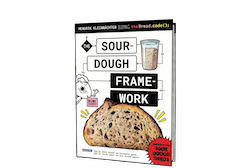
Powered by The Sourdough Framework
Support Loafy by buying the book or leaving a donation.