Unlock Your Baking Potential
You’re about to create a super-powered starter that will change what’s possible in your kitchen.
A stiff starter has 50-60% hydration, meaning less water than flour. This simple change boosts yeast activity and produces a milder, less sour bread.
In just 3 days, you’ll have a starter capable of making the fluffiest brioche, the tallest panettone, and breads you never thought possible at home.
Based on The Sourdough Framework chapter on starter types.

Frequently asked questions
What hydration is a stiff starter?
A stiff starter is 1 part flour to about half a part water, so 50 to 60% hydration.
My stiff starter came out too dry. What should I do?
Add water until no dry bits are left, going up to 60% hydration, a bit more with whole wheat or rye since the bran absorbs more. It should feel like pasta dough and stick slightly to the counter when you lift it. Too dry and it will look inactive.
Can I make a poolish with a stiff starter?
A classic poolish uses commercial yeast, so with a stiff starter you are really building a levain. That works fine: feed your stiff starter with equal parts flour and water and use it like a regular starter in the dough.
How do I use a stiff starter in a hot kitchen?
The stiff starter barely changes the total water, so keep your usual hydration. At 28 to 30 degrees the bigger lever is the amount: go down to 1 to 5% starter so bulk fermentation takes 8 to 10 hours instead of racing ahead.
Which starter gives a less sour bread?
A stiff starter. It favors yeast over bacteria, so for the same rise you get noticeably less acidity. Feeding it daily at room temperature helps even more.
Questions other bakers asked
What You Need
To make a stiff starter, you need an existing active starter (regular or liquid).
If you don’t have one yet, start with the Make a Starter flow first.
Already have an active starter? Great, let’s convert it!
Gather Your Supplies
You will need:
- Active sourdough starter (any type)
- Flour (any type you normally use)
- Water (room temperature)
- Digital scale (important for accuracy)
- Glass jar or container
A scale is especially important for stiff starters since the ratios matter more.
Why This Changes Everything
This isn’t just a different starter. It’s a game changer for your baking.
What you unlock:
- More yeast activity = breads that rise higher than ever
- Less acid production = milder, sweeter flavor
- Works with weak flours = no more flat loaves
- Perfect for enriched doughs = Stollen, brioche, croissants
- More forgiving = bigger fermentation window, more room for error
In tests, stiff starters produced significantly more CO2 than regular starters with the same amount of flour. That means better rise, better crumb, better bread.
Day 1: The Transformation Begins
Here we go! Take from your existing starter:
- 10g starter
Add:
- 50g flour
- 25-30g water (that’s 50-60% hydration)
Mix thoroughly until no dry flour remains. The dough should feel like pasta or pizza dough.
If using whole wheat or strong flour, you may need closer to 30g water. The mixture should not be crumbly.
You’re teaching your microbes a new way to live. They’ll thank you with incredible bread.
Check the Consistency
Your stiff starter should:
- Have no dry chunks of flour
- Feel like pasta dough
- Slightly stick to the counter when pressed
- Be much drier than a regular starter
Too dry? Add a tiny bit more water.
Too wet? It will still work, just add less water next time.
Place in a jar, cover loosely, and let it rest in a warm spot.
Day 1: Let the Magic Happen
Now let the mixture sit for 24 hours.
Behind the scenes, something amazing is happening. Your microbes are adapting to their new, drier home. The yeast is starting to thrive while the bacteria slow down.
Don’t worry if it takes longer to show activity than your regular starter. This is completely normal. The transformation is happening at the microscopic level.
See you tomorrow!
Day 2: Building Strength
Welcome back! Time to reinforce the transformation.
Same recipe as yesterday:
- Take 10g from yesterday’s stiff starter
- Add 50g flour
- Add 25-30g water (50-60% hydration)
- Mix until pasta-dough consistency
Discard the rest. Cover loosely and return to your warm spot.
Your starter is learning. Each feeding makes it stronger.
Day 2: Getting Stronger
Another 24 hours of rest.
With each feeding at the same hydration, your microbes are becoming specialists. The yeast is getting more efficient. The balance is shifting in your favor.
One more day to go!
Day 3: The Final Push
This is it! The final feeding to complete the transformation.
- Take 10g starter
- Add 50g flour
- Add 25-30g water
- Mix to pasta-dough consistency
After this feeding, wait 12-24 hours then check for readiness signs. You’re almost there!
The Moment of Truth
After the final rest, look for these signs of a healthy stiff starter:
- Dome shape: The top should be slightly domed
- Air pockets: Visible bubbles on the sides of the jar
- Mild smell: Less sour, more alcoholic than before
- Structure: If you flip the jar upside-down, it should NOT fall out immediately
Do you see these signs? If yes, you’ve done it!
You Did It!
Congratulations! You’ve successfully created a stiff starter.
Your starter now has superpowers:
- Enhanced yeast activity for incredible rise
- Milder flavor profile for versatile baking
- Better performance with weak flours
A whole new world of baking just opened up to you. Panettone, brioche, croissants… they’re all within reach now.
Let’s learn how to use your new secret weapon.
Using Your Stiff Starter
How much to use (baker’s math):
- Summer / warm: 1-10% of flour weight
- Winter / cold: 10-20% of flour weight
- Very cold: up to 30%
Mixing tip: Dissolve the stiff starter in the water you’ll use for your dough. This makes it easier to incorporate.
Example: For 500g flour dough, use 25-50g stiff starter. Dissolve it in your recipe water before adding flour.
Maintaining Your Starter
Keep the same ratio:
Always feed at 50-60% hydration to maintain the stiff character.
Storage:
- Room temp: Feed every 24-48 hours
- Fridge: Feed once a week
Switching back:
You can convert back to a regular starter anytime by feeding at 100% hydration for a few days.
Pro tip: You can also save a piece of your bread dough after bulk fermentation to use as your next starter!
Your Baking Journey Begins
Your stiff starter is ready for action. Here’s what you can make now:
- 🍞 Sourdough bread with incredible rise
- 🥐 Croissants with perfect layers
- 🎄 Panettone and Stollen for the holidays
- 🧁 Brioche that’s fluffy, not sour
- 🍕 Pizza with complex, sweet flavor
You’ve unlocked a whole new level of home baking. Go make something amazing!
Questions? Ask Loafy for help.
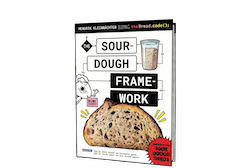
Powered by The Sourdough Framework
Support Loafy by buying the book or leaving a donation.