आपकी सबसे अच्छी लोफ इंतज़ार कर रही है
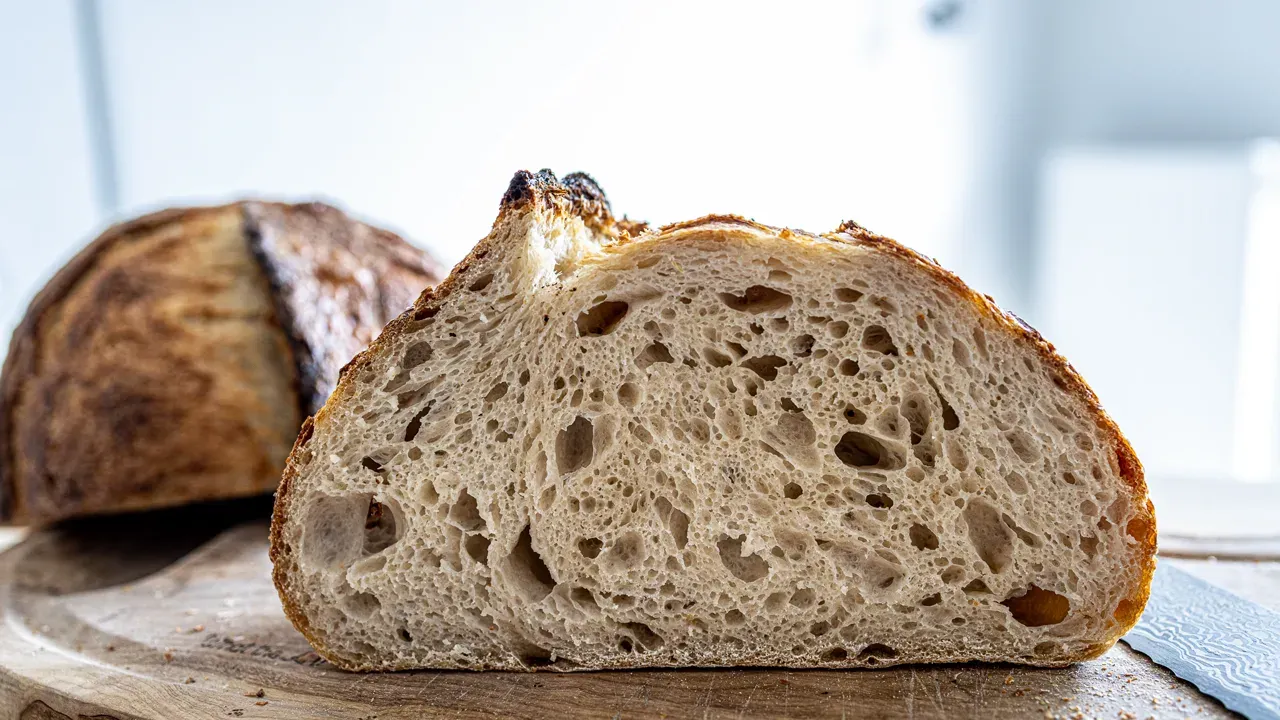
अगले 24-48 घंटों में, आप अपने ओवन से एक कुरकुरी, सुनहरी लोफ निकालेंगे। वो जिसे टैप करने पर वो संतोषजनक क्रैकल आवाज़ आती है और अंदर हवादार, खुला क्रम्ब।
यह असली चीज़ है। कोई शॉर्टकट नहीं, कोई समझौता नहीं। बस आप, आटा, पानी, नमक, और थोड़ा जंगली यीस्ट और बैक्टीरिया का जादू।
पहली बार? चिंता न करें। “फेल” साउरडो भी अविश्वसनीय टोस्ट बनाती है। आप यह कर सकते हैं।
कुछ स्वादिष्ट बनाने के लिए तैयार?

अक्सर पूछे जाने वाले प्रश्न
मेरी साउरडो ब्रेड घनी क्यों है?
आमतौर पर अधूरा फरमेंटेशन या कमज़ोर स्टार्टर। पक्का करें कि आपका स्टार्टर फीडिंग के बाद भरोसेमंद ढंग से फूलता है, डो को पूरा बल्क राइज़ दें जब तक वह लगभग 50% बड़ी न हो जाए, और स्ट्रेच और फोल्ड से संरचना बनाएं।
बल्क फरमेंटेशन में कितना समय लगता है?
जब तक डो लगभग 50% फूल न जाए और हवादार न लगे: कमरे के तापमान पर मोटे तौर पर 4-8 घंटे, तापमान और स्टार्टर की ताकत के आधार पर।
साउरडो ब्रेड के लिए मुझे कितना हाइड्रेशन रखना चाहिए?
ज़्यादातर लोफ के लिए 65-75% ठीक रहता है। लगभग 70% से शुरू करें; ज़्यादा हाइड्रेशन से क्रम्ब ज़्यादा खुला बनता है, लेकिन डो ज़्यादा गीली और चिपचिपी होती है।
मुझे कितना स्टार्टर चाहिए?
आटे के वज़न का लगभग 10-20%। लंबे, ठंडे फरमेंटेशन के साथ कम स्टार्टर ज़्यादा स्वाद बनाता है; ज़्यादा स्टार्टर से फरमेंटेशन तेज़ होता है।
क्या साउरडो को गूंधना ज़रूरी है?
नहीं। बल्क फरमेंटेशन के दौरान स्ट्रेच और फोल्ड के कुछ राउंड बिना गूंधे ही पर्याप्त ग्लूटेन संरचना बना देते हैं।
कुरकुरा क्रस्ट कैसे पाएं?
स्टीम को अंदर रोकने के लिए पहले 20 मिनट प्रीहीटेड डच ओवन में ढक्कन लगाकर बेक करें, फिर ढक्कन हटाकर तब तक बेक करें जब तक क्रस्ट गहरा सुनहरा-भूरा न हो जाए।
दूसरे बेकर्स द्वारा पूछे गए सवाल
सामग्री इकट्ठा करें
शुरू करने से पहले, सुनिश्चित करें कि आपके पास है:
- आटा (ब्रेड फ्लौर की सिफारिश)
- पानी
- नमक
- एक्टिव साउरडो स्टार्टर (बुलबुलेदार और तैयार)
अभी तक स्टार्टर नहीं है? पहले एक बनाएं और जब यह एक्टिव हो तब वापस आएं।
पूरी प्रक्रिया देखना चाहते हैं? यह वो मास्टरक्लास है जिस पर यह यात्रा आधारित है:
माप लें
एक लोफ के लिए, आपको लगभग चाहिए:
🧑🍳 सोलो बेकर व्यक्तिगत अभ्यास के लिए परफेक्ट!
मानक प्रति लोफ 500g है। रोल्स के लिए कम, सैंडविच लोफ के लिए 2000g तक।
आसान। हल्की चिपचिपाहट के साथ अच्छी संरचना।
बेहतरीन संतुलन! स्वाद जोड़ता है और आटा संभालने योग्य रहता है।
-
ब्रेड फ्लौर 400g (80%)साबुत गेहूं / राई / स्पेल्ट 100g (20%)कुल आटा 500g (100%)
- पानी (कमरे का तापमान) 300g (60%)
-
एक्टिव स्टिफ स्टार्टर 50g (10%)
- नमक 10g (2%)
सामग्री मिलाएं (फरमेंटोलिसिस)
एक बाउल में आटा, पानी, स्टार्टर और नमक मिलाएं। जब तक कोई सूखा आटा न बचे तब तक मिलाएं।
हाथ से या स्टैंड मिक्सर से 2-3 मिनट लगने चाहिए। इससे तुरंत फरमेंटेशन शुरू हो जाती है (फरमेंटोलिसिस)।
मिलाने के बाद, 30 मिनट इंतज़ार करें।
💡 सुझाव
- • बेहतरीन परिणामों के लिए कमरे के तापमान का पानी उपयोग करें
- • डो शुरू में खुरदरी होगी - यह सामान्य है!
डो की ताकत जांचें
विंडोपेन टेस्ट करें: धीरे से डो का एक टुकड़ा खींचें।
- अगर फटती है: 2-3 मिनट गूंधें, फिर 10 मिनट आराम दें। जब तक पास न हो तब तक दोहराएं।
- अगर पतली खिंचती है (पारदर्शी): अगले स्टेप पर आगे बढ़ें।
बल्क फरमेंटेशन
डो को ढकें और राइज़ होने दें। डो के संकेतों को देखें:
- 30-50% वॉल्यूम वृद्धि (मापने के लिए एलीक्वोट जार का उपयोग करें)
- सतह पर बुलबुले दिखाई दे रहे हैं
- जब आप बाउल हिलाते हैं तो जिगली टेक्सचर
- मीठी/खट्टी गंध विकसित हो रही है
अगर डो फ्लैट होने लगे, स्ट्रेच और फोल्ड करें। यह आमतौर पर बल्क फरमेंटेशन के दौरान 1-2 बार होता है।
इसमें आमतौर पर 6-12 घंटे लगते हैं। समय नहीं, डो के संकेतों को देखें।
विभाजित करें और प्री-शेप करें
धीरे से डो को विभाजित करें और गोल आकार में प्री-शेप करें।
नोट: विभाजित और प्री-शेप करना सिर्फ तब ज़रूरी है जब आप एक से ज़्यादा लोफ बना रहे हों। नहीं तो, सीधे शेप करें।
बेंच रेस्ट
डो को 15-20 मिनट के लिए बिना ढके आराम दें।
इससे ग्लूटेन रिलैक्स होता है और फाइनल शेपिंग आसान हो जाती है।
नोट: बेंच रेस्ट सिर्फ तब ज़रूरी है जब आपने प्री-शेप किया हो। नहीं तो, सीधे शेप करें।
फाइनल शेप
बटार्ड (अंडाकार) या बूल (गोल) में शेप करें।
बैनेटन या किचन तौलिये से लाइन किए बाउल में रखें, सीम वाली तरफ ऊपर।
प्रूफिंग
प्रूफिंग शेपिंग के बाद फाइनल फरमेंटेशन है। अपनी विधि चुनें:
- कोल्ड प्रूफ (अनुशंसित): ढककर रेफ्रिजरेट करें (4°C/39°F) 8-96 घंटे के लिए। ब्रेकफास्ट या डिनर के लिए ताज़ी ब्रेड शेड्यूल करने के लिए आदर्श।
- रूम टेम्परेचर: 1-3 घंटे इंतज़ार करें जब तक फिंगर पोक टेस्ट का गड्ढा धीरे-धीरे वापस आए।
ओवन प्रीहीट करें
ओवन को 30-45 मिनट के लिए 230°C (450°F) पर प्रीहीट करें।
🌡️ प्रो टिप: ओवन थर्मामीटर का उपयोग करें। आप हैरान होंगे कि कितनी बार ओवन सेटिंग की तुलना में गर्म या ठंडे चलते हैं।
सेटिंग्स: टॉप/बॉटम हीट, कोई फैन नहीं। अगर फैन बंद नहीं हो सकता, डच ओवन का उपयोग करें। अगर आपके पास स्टीम ओवन है, मैक्सिमम स्टीम सेटिंग उपयोग करें। ओवन समस्याओं का निवारण।
स्कोर करें
डो को पार्चमेंट पेपर पर ट्रांसफर करें।
“ईयर” बनाने के लिए 45-डिग्री एंगल पर सतह को स्कोर करें।
स्कोरिंग में अभ्यास लगता है! इसे सही करने में कुछ प्रयास लगेंगे। अगर सही किया तो, आपको अमेज़िंग ओवन स्प्रिंग मिलेगी।
बेक करें
पहले 30 मिनट: स्टीम के साथ बेक करें (वॉटर ट्रे, ओवन स्टीम सेटिंग, या डच ओवन ढक्कन) ताकि क्रस्ट बहुत जल्दी सेट न हो।
फिर 20 और मिनट: स्टीम/ढक्कन हटाएं और मनचाहे क्रस्ट कलर तक बेक करें। ओवन 230°C (450°F) पर रखें। अब आप बेकिंग समय कम करने और एनर्जी बचाने के लिए ओवन की फैन सेटिंग उपयोग कर सकते हैं।
टिप: अगर आपके पास थर्मामीटर है, तो कोर तापमान माप सकते हैं। ब्रेड पकी है जब यह 92°C (198°F) पहुंचे।
आनंद लें!
बधाई हो! 🎊
स्लाइस करने से पहले अपनी ब्रेड को कम से कम एक घंटे ठंडा होने दें। आपने कर दिया! अपनी घर की बनी साउरडो मास्टरपीस का आनंद लें।
कुछ प्लान के अनुसार नहीं हुआ? लोफी से पूछें।
The Sourdough Framework पर आधारित
पुस्तक खरीदकर या दान देकर Loafy का समर्थन करें।